In terminal operations—whether container terminals, bulk cargo, or RoRo facilities—planning functions play a crucial role in ensuring the efficient flow of cargo, optimal resource usage, and smooth coordination between vessels, yard, and gate activities.
The key planning functions in terminal operations include:
- Berth Planning
Allocating berthing space and time slots for incoming vessels to avoid congestion and reduce turnaround times. - Yard Planning
Strategically placing containers or cargo in the yard for efficient stacking, retrieval, and minimal re-handling. - Equipment Planning
Assigning cranes, trucks, and other handling equipment to the right tasks, optimizing availability and minimizing idle time. - Workforce Planning
Scheduling labor shifts and assigning tasks based on operational demand and peak times. - Gate Planning
Managing inbound and outbound truck flows to reduce wait times and enhance gate efficiency. - Vessel Planning (Stowage and Discharge)
Deciding the order and method of loading/unloading containers, considering destination, weight, and type. - Contingency Planning
Preparing for disruptions such as equipment failure, bad weather, or delays by creating backup plans.
Effective planning in terminal operations leads to higher productivity, better safety, improved customer satisfaction, and reduced operational costs.
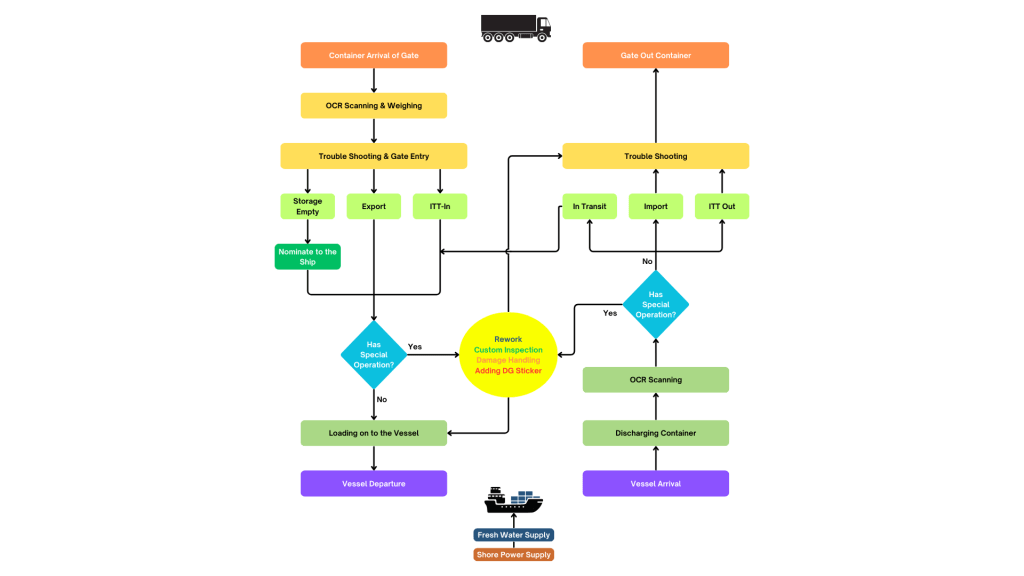
Container Handling Process

Flow Chart of the Container Handling Operation
 Marine Diaries

Leave a comment