- 9 DG CLASSES
- IMDG Labels
- 💥 Class 1 – Explosives
- 💨 Class 2 – Gases
- 🔥 Class 3 – Flammable Liquids
- 🔥 Class 4 – Flammable Solids, Spontaneously Combustible Substances, and Substances Dangerous When Wet
- ⚠️ Class 5 – Oxidizing Substances and Organic Peroxides
- ☠️ Class 6 – Toxic and Infectious Substances
- ☢️ Class 7 – Radioactive Material
- ⚠️ Class 8 – Corrosive Substances
- ⚠️ Class 9 – Miscellaneous Dangerous Substances and Articles
- IMDG segregation table
- 🌊 Environmental Considerations in IMDG Code (Marine Pollutants & Safety)
- 🌍 Environmentally Hazardous Substances (EHS)
Efficient and safe stacking of dangerous goods is a critical aspect of maritime logistics. The International Maritime Dangerous Goods (IMDG) Code provides comprehensive guidelines for handling, segregation, and storage of hazardous materials during transport. One key area of focus is stacking—how dangerous goods containers are arranged and stored on vessels and terminals to prevent accidents, leaks, or chemical reactions. This article explores the principles of IMDG stacking, its importance in global trade, and best practices for ensuring compliance and safety.
9 DG CLASSES
- Class 1 : Explosives
- Class 2 : Gases
- Class 3 : Flammable liquids
- Class 4 : Flammable solids
- Class 5 : Oxidizing substances and organic peroxides
- Class 6 : Toxic and infectious substances
- Class 7 : Radioactive material
- Class 8 : Corrosive substances
- Class 9 : Miscellaneous dangerous substances and articles
To ensure global consistency in the safe transport of dangerous goods, a United Nations (UN) committee has established 9 primary hazard classes. These classes serve as the international standard for identifying and categorizing hazardous materials across all modes of transport—road, rail, air, and sea. The goal is to provide a unified system so that hazardous materials are recognized and managed similarly, regardless of how or where they are transported.
These 9 classes cover a wide range of substances, from explosives and flammable liquids to toxic and radioactive materials. To enhance clarity and safety, many of these classes are further subdivided based on the specific nature or behavior of the substance, in accordance with guidelines from the International Maritime Organization (IMO).
For instance:
Class 6 deals with toxic and infectious substances, but it is split into two subcategories:
- Class 6.1: Toxic substances, which can cause death or serious injury if swallowed, inhaled, or absorbed through the skin.
- Class 6.2: Infectious substances, which contain pathogens like bacteria or viruses that can cause diseases in humans or animals.
These classifications play a critical role in the safe stacking, segregation, labeling, and handling of dangerous goods, particularly in maritime environments where improper storage can lead to serious hazards.
IMDG Labels
IMDG labels are standardized hazard warning labels used on packages and containers carrying dangerous goods by sea, as defined by the International Maritime Dangerous Goods (IMDG) Code. These labels are essential for identifying the nature of the hazard associated with the cargo and ensuring safe handling, storage, and transportation.
Each IMDG label corresponds to a specific hazard class or division, and includes:
- A symbol representing the type of hazard (e.g., flame for flammables, skull and crossbones for toxic substances).
- The class number at the bottom (e.g., 3 for flammable liquids, 8 for corrosives).
- A color code that visually reinforces the hazard type (e.g., red for flammable, yellow for oxidizers, white/black for toxic).
The labels must be:
- Durable, weather-resistant, and clearly visible.
- Applied on all four sides of containers (for cargo transport units) or on packages themselves.
- Accompanied by placards or markings when required by the IMDG Code.
Proper IMDG labeling is not just a legal requirement—it’s a key safety measure that helps port workers, ship crews, and emergency responders quickly identify hazards and respond appropriately in case of an incident.
💥 Class 1 – Explosives
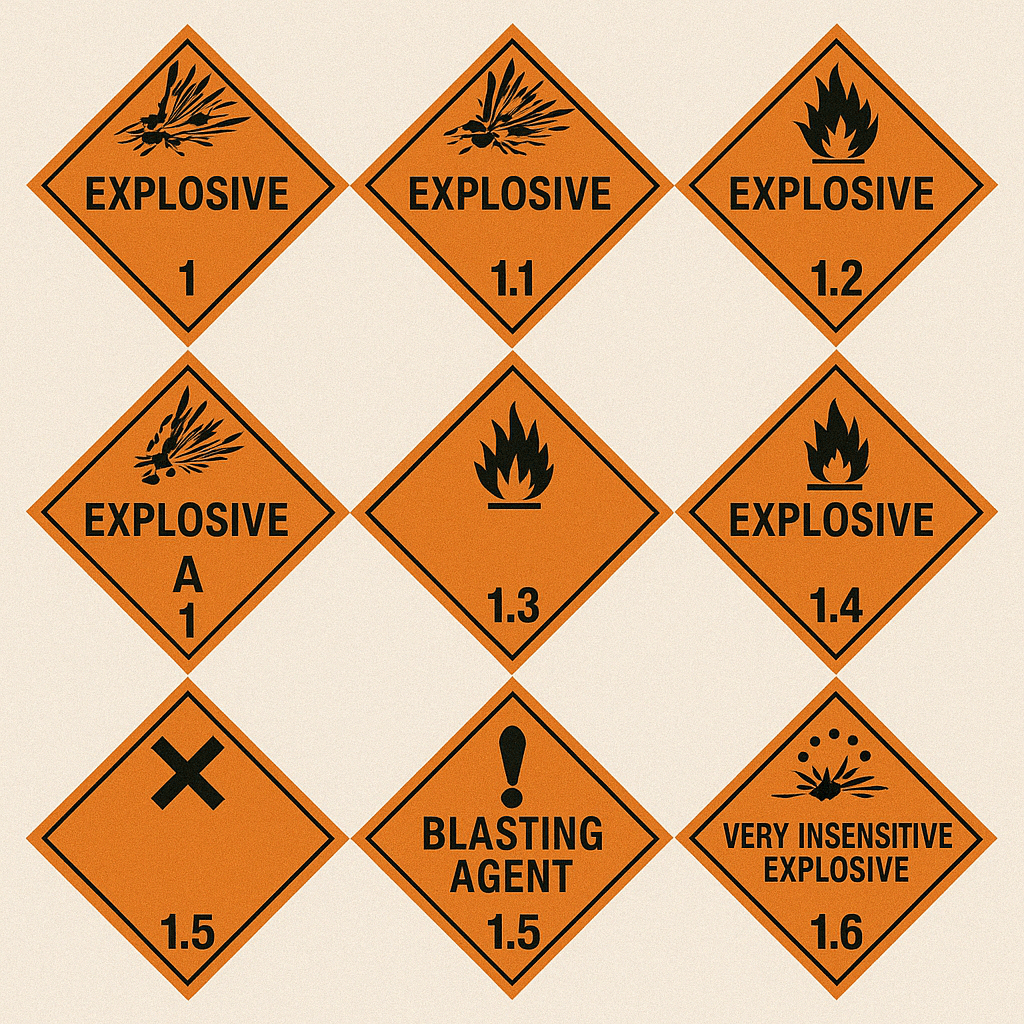
These are substances and articles that have a risk of explosion, projection, fire, or mass explosion during transport. Class 1 is highly regulated due to the extreme risks associated with it.
🔻 Divisions of Class 1:
Class 1 is subdivided into six divisions, based on the type and intensity of hazard:
- 1.1 Substances with a mass explosion hazard (affects almost the entire load instantly)
- 1.2 Substances with a projection hazard, but not a mass explosion
- 1.3 Substances with a fire hazard, minor blast or projection risk
- 1.4 Substances with no significant hazard, minimal danger in case of ignition
- 1.5 Very insensitive explosives, mass explosion hazard but very unlikely to ignite
- 1.6 Extremely insensitive articles, no mass explosion risk, but still classified as explosives
🏷️ Labeling:
- Diamond shape
- Orange background
- Exploding bomb symbol
- Class number 1 at the bottom
- Subdivision number (e.g., 1.1, 1.2) usually marked near the center or bottom corner
💨 Class 2 – Gases
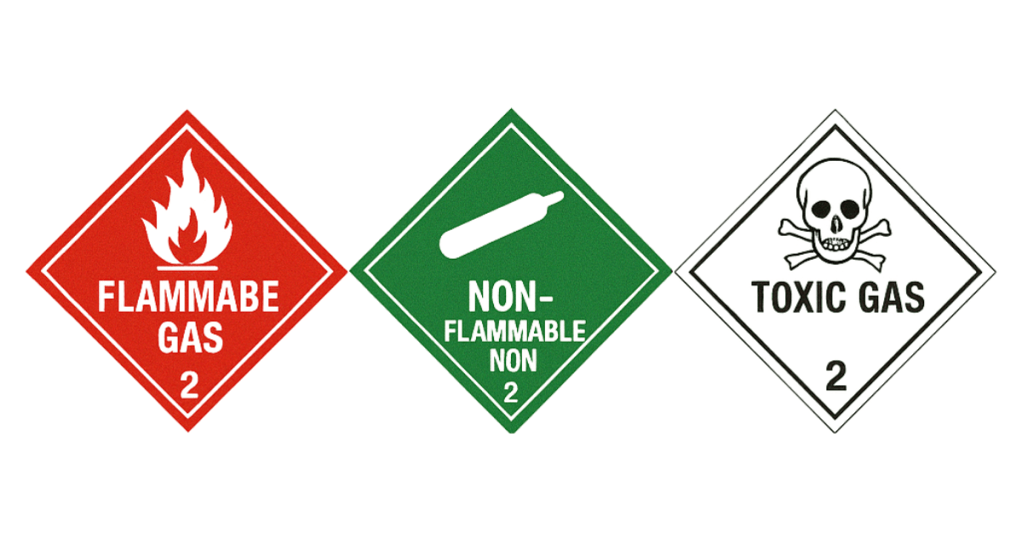
This class includes gases transported under pressure and divided into three divisions based on their primary hazard.
🔻 Divisions of Class 2:
| Division | Description | Label Color |
| 2.1 | Flammable gases – ignite in air | 🔴 Red |
| 2.2 | Non-flammable, non-toxic gases – asphyxiant or oxidizer | 🟢 Green |
| 2.3 | Toxic gases – hazardous to health when inhaled | ⚪ White |
🧪 Examples:
- 2.1: Propane, butane, hydrogen
- 2.2: Nitrogen, carbon dioxide, helium
- 2.3: Chlorine, ammonia, phosgene
🏷️ Labeling:
- Diamond shape
- Division number (2.1, 2.2, 2.3) at the bottom
- Symbols:
Flame for flammable
Gas cylinder for non-flammable/non-toxic
Skull and crossbones for toxic gases
🔥 Class 3 – Flammable Liquids

These are liquids, or mixtures of liquids, or liquids containing solids in solution or suspension, which give off a flammable vapor at temperatures of not more than 60–65°C (140–149°F). This includes substances transported at elevated temperatures in a liquid state.
🔻 Key Characteristics:
- Easily ignite in presence of heat, spark, or flame
- May cause explosions in confined spaces
- Vapors are heavier than air and may travel to ignition sources
🧪 Common Examples:
- Petrol (gasoline)
- Diesel fuel
- Paints and varnishes
- Alcohols (e.g., ethanol, methanol)
- Acetone
📦 Labeling:
- Diamond-shaped label
- Red background
- Flame symbol
- The number 3 at the bottom
- Text: “FLAMMABLE LIQUID”
🔥 Class 4 – Flammable Solids, Spontaneously Combustible Substances, and Substances Dangerous When Wet
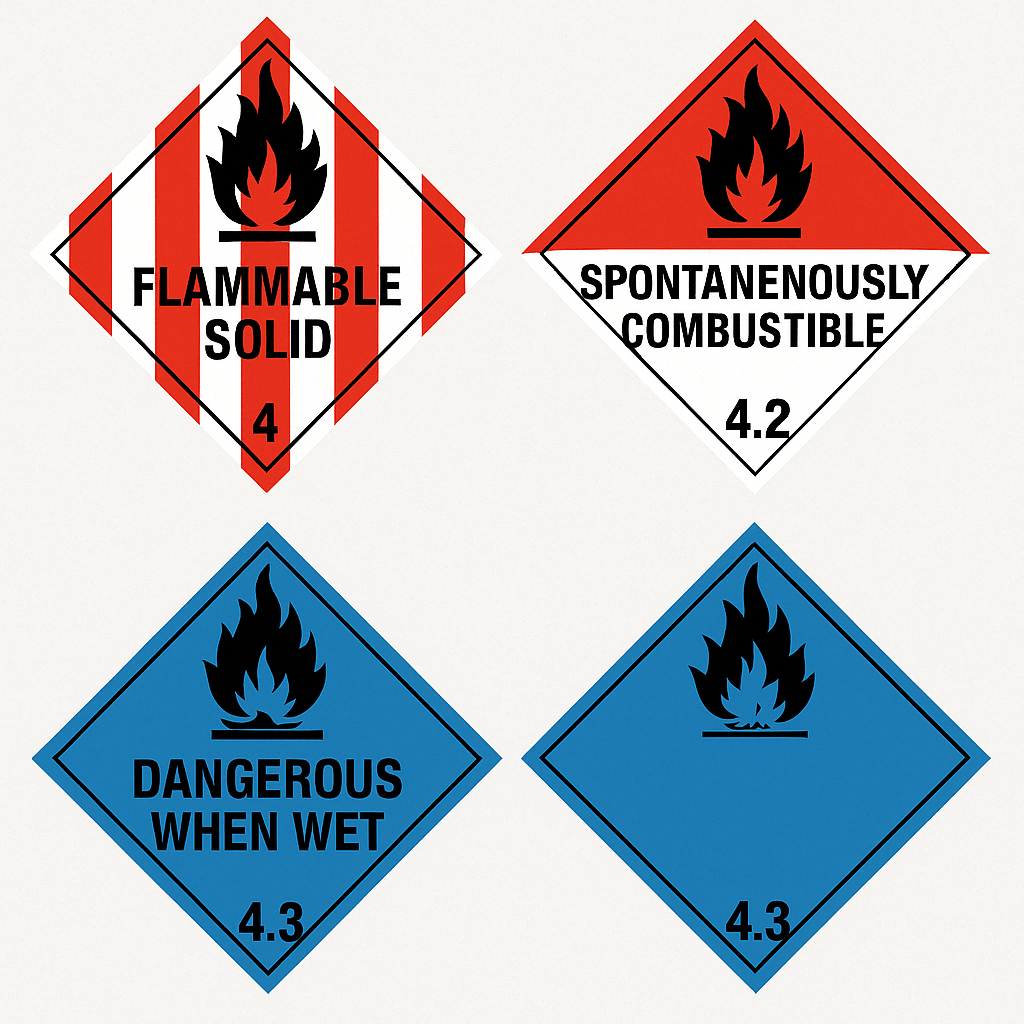
This class includes solids and substances that can ignite or become hazardous under certain conditions such as friction, contact with air, or exposure to water.
🔴 Division 4.1 – Flammable Solids
These are solids that can easily ignite through friction, heat, or contact with an ignition source, and burn vigorously.
- May include self-reactive substances and desensitized explosives.
- Examples: Matches, magnesium, sulfur, naphthalene, nitrocellulose
- Label: Red and white vertical stripes with a flame symbol and class number 4.1
⚪ Division 4.2 – Substances Liable to Spontaneous Combustion
These substances may spontaneously ignite when exposed to air, or self-heat gradually until ignition occurs.
- Includes pyrophoric substances and self-heating materials.
- Examples: White phosphorus, oily cotton, fishmeal
- Label: Top half white / bottom half red with a flame symbol and class number 4.2
💧 Division 4.3 – Substances Which, on Contact with Water, Emit Flammable Gases
Reacts dangerously with water, often producing flammable or toxic gases which may ignite spontaneously.
- Storage must avoid any moisture or water contact.
- Examples: Calcium carbide, sodium, potassium, aluminum phosphide
- Label: Blue background with a flame over water symbol and class number 4.3
⚠️ Class 5 – Oxidizing Substances and Organic Peroxides
These substances don’t burn themselves but can intensify combustion and cause or accelerate the ignition of other materials.
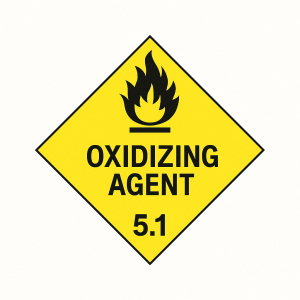
🟡 Division 5.1 – Oxidizing Substances
These substances are not necessarily combustible on their own, but they release oxygen or another oxidizing agent.
- They enhance the combustion of other materials.
- Can cause violent reactions when in contact with fuels or organic matter.
- Examples: Ammonium nitrate, potassium permanganate, calcium hypochlorite
- Label: Yellow background with a flame over a circle symbol and class number 5.1
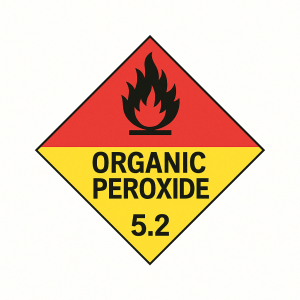
🧪 Division 5.2 – Organic Peroxides
These are unstable compounds that are powerful oxidizers and may decompose explosively, burn rapidly, or be sensitive to shock or friction.
- Many must be temperature controlled during transport.
- Hazards include: fire, explosion, toxic vapors
- Examples: Benzoyl peroxide, methyl ethyl ketone peroxide
- Label: Top half red, bottom half yellow, with a flame symbol and class number 5.2
☠️ Class 6 – Toxic and Infectious Substances
This class is divided into two divisions:
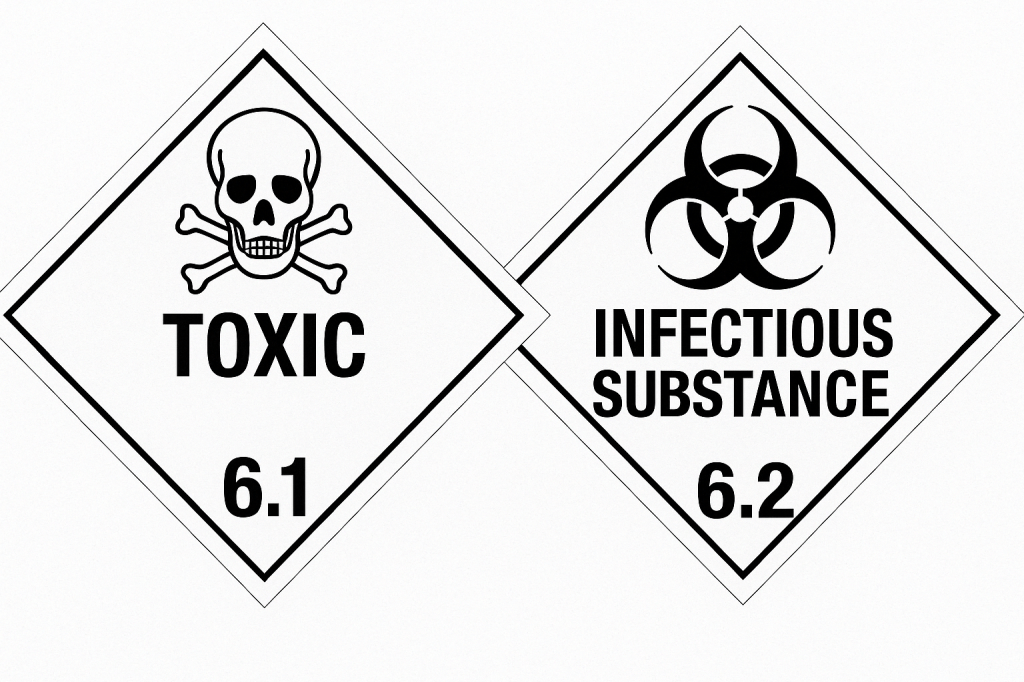
⚫ Division 6.1 – Toxic Substances
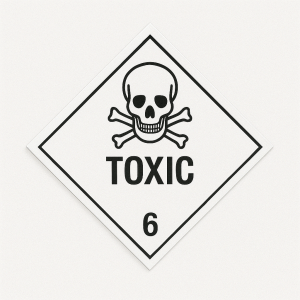
These are materials that can cause death, serious injury, or harm to human health if inhaled, swallowed, or absorbed through the skin.
- May include both liquids and solids.
- Examples: Arsenic, cyanide, nicotine, pesticides
- Label: White background, skull and crossbones symbol, class number 6.1
🧬 Division 6.2 – Infectious Substances
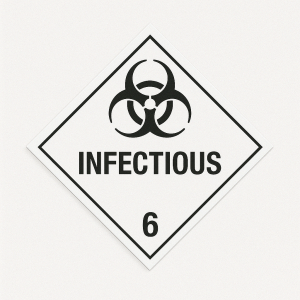
Substances known or reasonably expected to contain pathogens that can cause diseases in humans or animals.
- Includes medical waste, diagnostic samples, or biologically active substances.
- Examples: Clinical waste, viruses, bacteria like Ebola or anthrax
- Label: White background, three crescents forming a circle (biohazard symbol), class number 6.2
☢️ Class 7 – Radioactive Material
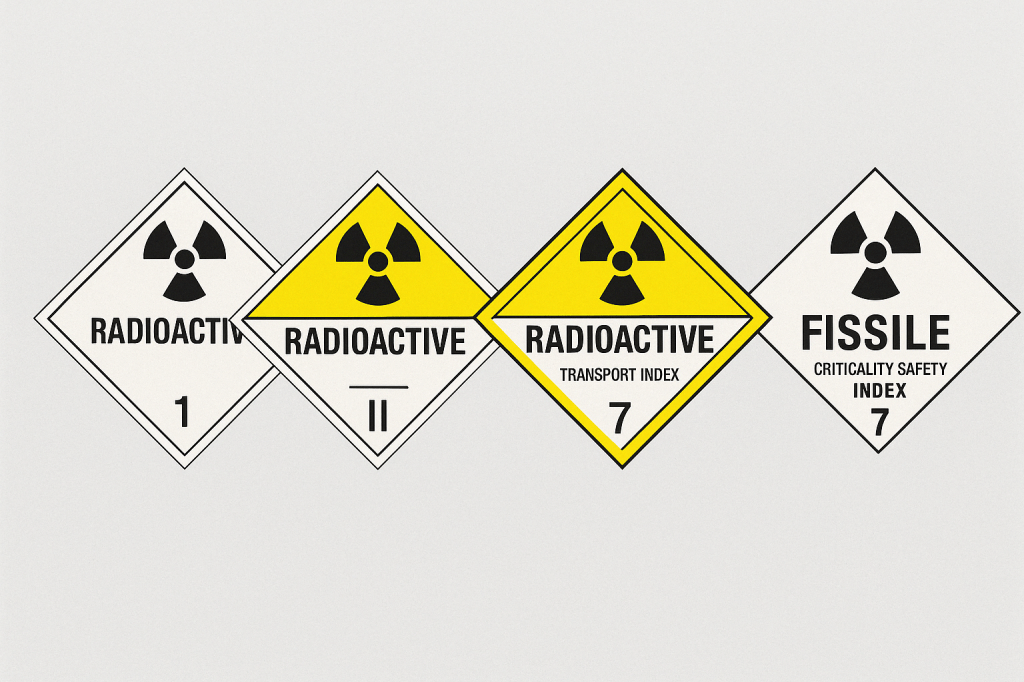
Class 7 includes materials that emit ionizing radiation, which can be harmful to human health and the environment. These substances require strict packaging, labeling, and documentation to ensure safety during transport.
🔎 Key Characteristics:
- Emission of alpha, beta, or gamma radiation
- Requires shielding and distance to prevent exposure
- Monitoring devices and special handling procedures are mandatory
🧪 Examples:
- Uranium
- Plutonium
- Medical isotopes (e.g., Iodine-131)
- Industrial radiography sources
🏷️ Labeling:
There are four types of labels used for radioactive materials, depending on the level of radiation:
Category I – WHITE
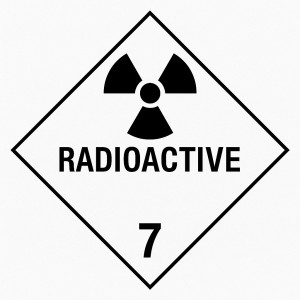
Very low radiation levels
Label: White with black text and radiation symbol
Category II – YELLOW
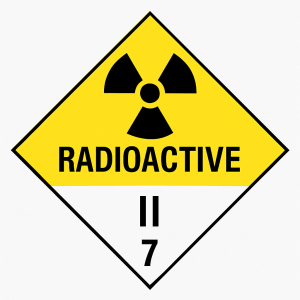
Medium radiation levels
Label: Yellow and white with black text and symbol
Category III – YELLOW
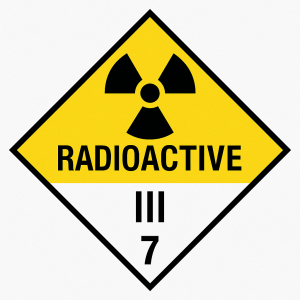
High radiation levels
Label: Yellow and white with bold border and text
FISSILE
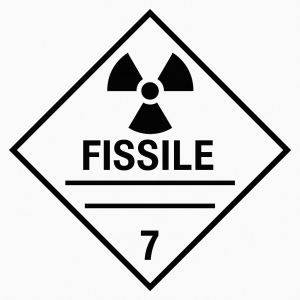
Special label for materials capable of sustaining a nuclear chain reaction
Includes criticality safety information
Each label includes:
- The trefoil (radiation) symbol
- Class number 7
- Transport index (TI) for Category II and III
- Wordings such as “RADIOACTIVE”, “FISSILE”
⚠️ Class 8 – Corrosive Substances
Class 8 covers substances that can cause severe damage to living tissue, as well as corrode metals or damage cargo, containers, and equipment during transport.
🔬 Key Characteristics:
React with moisture or tissue, causing chemical burns, skin damage, or eye injury
May corrode metals, damaging containers or ship infrastructure
Some can release dangerous fumes when reacting with other materials
🧪 Examples:
- Sulfuric acid
- Hydrochloric acid
- Sodium hydroxide (caustic soda)
- Battery acid
- Phenol
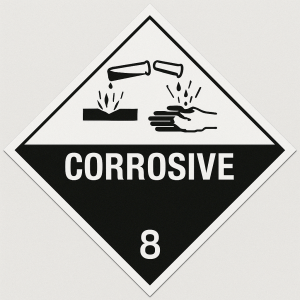
🏷️ Labeling:
- Shape: Diamond
- Color:
- Top half: white
- Bottom half: black
- Symbol: Two test tubes:
- One spilling on a hand
- One spilling on metal (showing corrosion)
- Class number: 8 at the bottom
⚠️ Class 9 – Miscellaneous Dangerous Substances and Articles
This class includes substances and articles that present a hazard during transport, but do not fall under Classes 1 to 8. These hazards may be chemical, environmental, or physical in nature.
🔍 Key Characteristics:
- May pose risk to the environment, health, or safety during transport
- Includes items with asphyxiant, elevated temperature, or lithium battery hazards
- Used for substances that are not easily classified elsewhere
🧪 Examples:
- Lithium batteries and battery-powered vehicles
- Dry ice (carbon dioxide, solid)
- Environmentally hazardous substances (marine pollutants)
- Life-saving appliances (e.g., inflatable rafts with gas cylinders)
- Magnetized materials
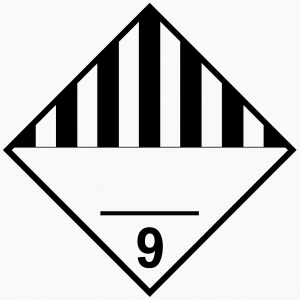
🏷️ Labeling:
Diamond shape
- Upper half: Black and white vertical stripes
- Lower half: White background with the number 9
- Often includes a horizontal black line above the number
- Some may include specific pictograms for lithium batteries or marine pollutants depending on UN number
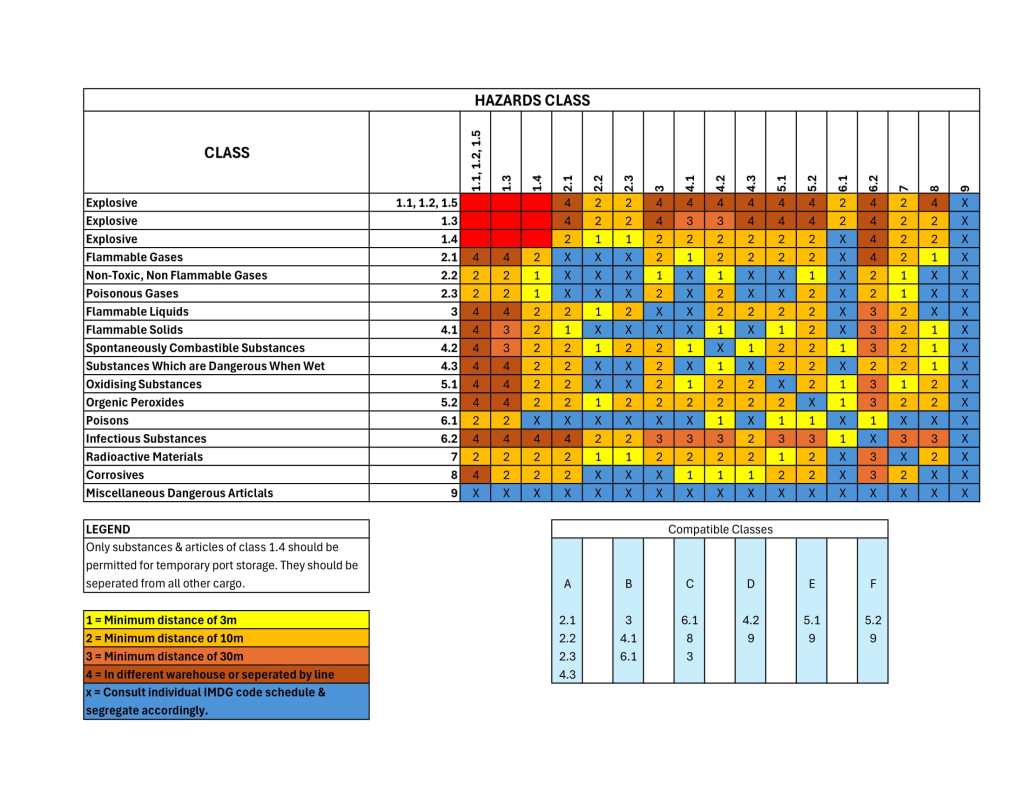
IMDG segregation table
🌊 Environmental Considerations in IMDG Code (Marine Pollutants & Safety)
The IMDG Code also emphasizes the protection of the marine environment, not just human health and cargo safety. Certain substances transported by sea pose serious environmental risks—especially to aquatic life, and require special handling, packaging, and labeling.
🐠 Marine Pollutants
Substances harmful to marine organisms are classified as Marine Pollutants in the IMDG Code.
🔎 Examples:
- Zinc oxide
- Phenol
- Pesticides
- Heavy metal compounds
⚠️ Marking Requirements:
Use of the Marine Pollutant symbol:
➤ A dead fish and tree symbol on a white diamond
➤ Must be placed on packages and cargo transport units
💧 Packaging & Segregation:
- Must be packed in watertight containers
- Avoid storage close to foodstuffs or other sensitive cargo
- Must not be stowed near drainage systems
🌍 Environmentally Hazardous Substances (EHS)
Some goods may also be labeled under Class 9 if they are environmentally hazardous but don’t fall into other classes.
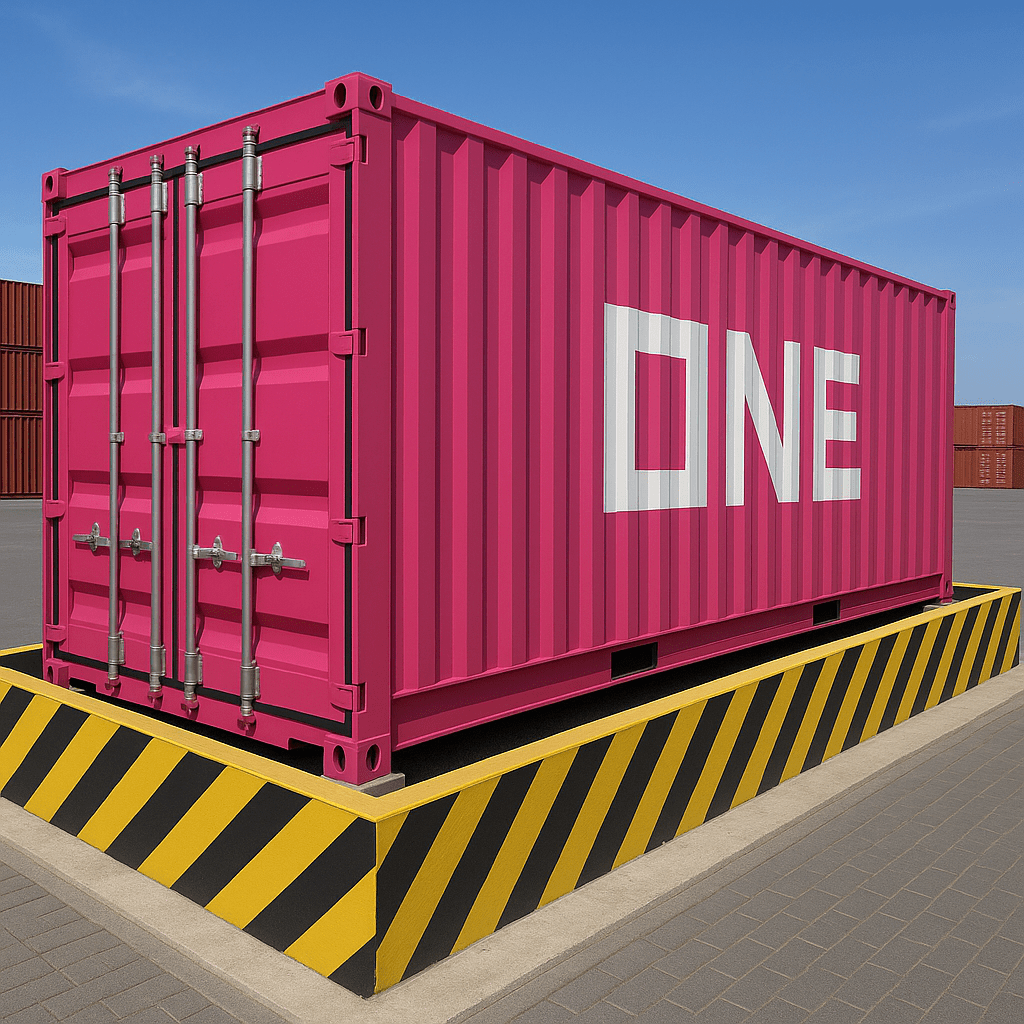
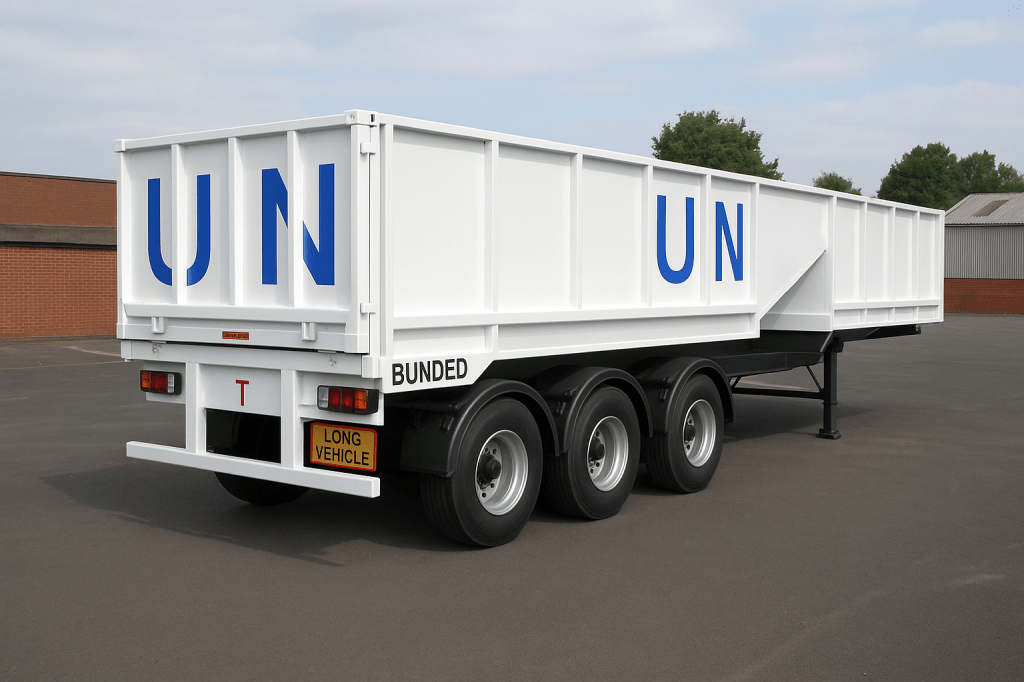
If hazardous goods are prone to leakage, it is essential to implement appropriate secondary containment systems to prevent environmental contamination. These systems serve as a backup barrier in case of primary packaging failure, helping to contain spills and protect marine ecosystems, human health, and port infrastructure. Secondary containment may include drip trays, bunds, sealed pallets, or double-walled containers, depending on the nature of the cargo. The IMDG Code encourages such precautions, especially when dealing with marine pollutants, corrosives, or toxic substances that could pose serious risks if released into the environment.
Leaking Bay using to store leaking containers
Bunded Trailer using to store leaking containers
 Marine Diaries